
Seeing Bicheno’s Little Penguins
Younique Stays invites you to enjoy one of the most magical experiences in Bicheno, watching the Little Penguins return to shore after a day of foraging at sea. Here are a few tips about what to do, what not to do and a little about the life of our penguins.
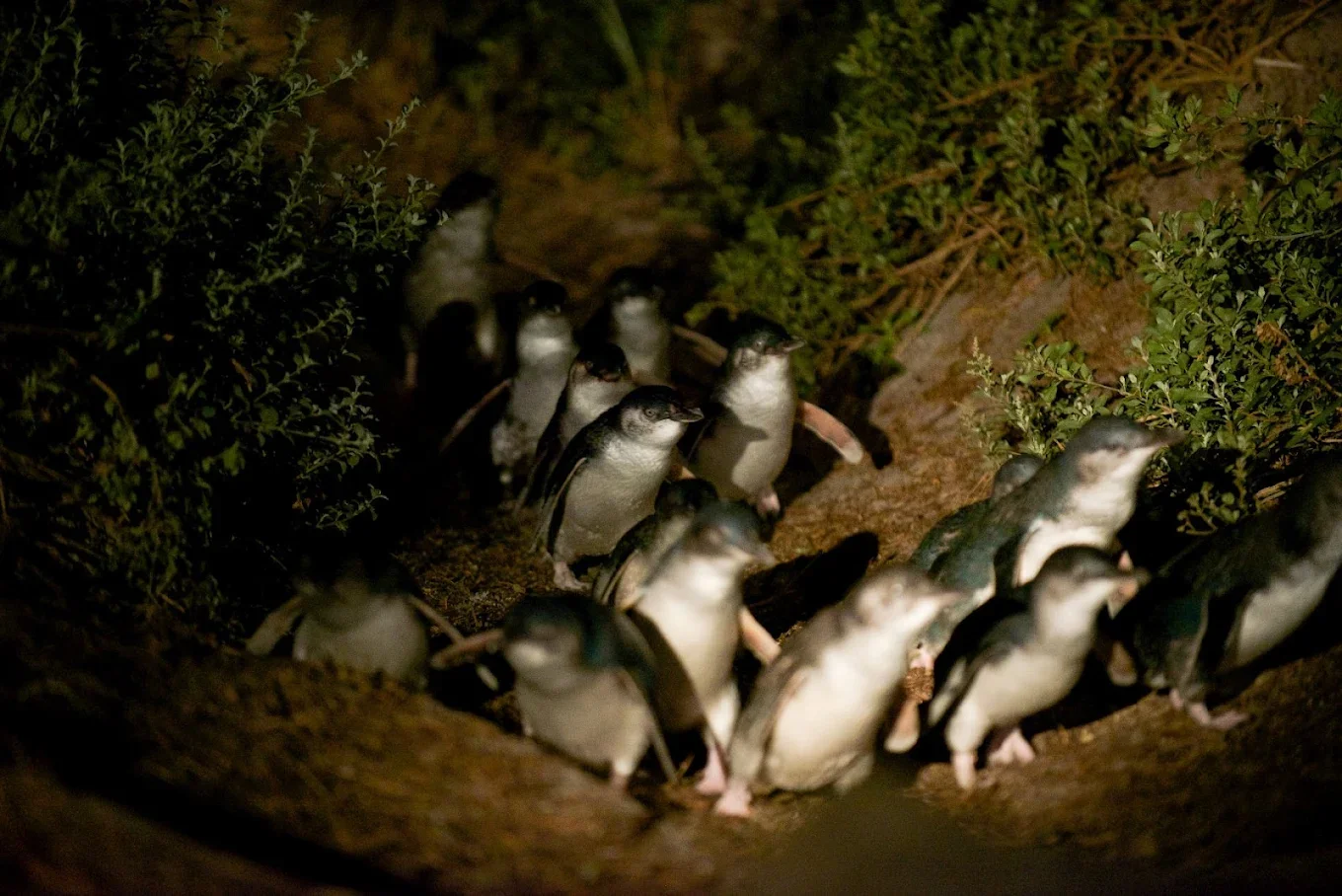
© Bicheno Penguin Tours
Depending on the time of year, the penguins in Bicheno may come home nightly. They travel extensively at sea to feed during the day and clamber over the rocks and beaches at sunset to their homes. They go out again at dawn. When they have chicks, there is plenty of noise upon their return to a hungry family but it doesn’t last long.
Many make their homes in and around our gardens, and waddle across the footpaths - but they probably have more right to be there than we do - so please be patient with them.
Because these incredible birds are highly vulnerable when they arrive on land, it is crucial that we watch them in a way that ensures their safety and peace of mind.
Please review these guidelines before heading out to see the penguins, as they are really important to Bicheno.
Timing and Arrival
Penguins only come ashore under the cover of darkness to protect themselves from natural predators. They will wait to gather fellow travellers (rafting up) so there is safety in numbers. They make a different call sign during this stage – almost like a duck, collecting a group together to come ashore in the waves.
Arrive early: Settle into your viewing spot just before dusk so you are completely still and quiet by the time the penguins arrive.
Be patient: The penguins will wait just beyond the breakers until they feel the coast is entirely safe. If they sense movement or see bright lights, they will stay at sea, which stresses them out and delays them feeding their hungry chicks in season.
The Light Rules
Penguins have incredibly sensitive night vision. Flash photography or bright white light can temporarily blind them, disorient them or scare them straight back into the ocean.
No Flash Photography: Flash photography and video spotlights are strictly prohibited.
No White Torches/Phone Lights: Do not use your smartphone flashlight or a standard white torch.
Use Red Light Only: If you need light to see your footing, use a dim torch covered in red cellophane (or a red-light setting on a headlamp). Never shine the light directly into their faces or out toward the water.
Behaviour Around the Rookery
To a 30cm-tall penguin, a human looks like a massive predator.
Keep your distance: Always stay at least 3 meters (10 feet) away from the penguins. Let them have the right of way.
Freeze if they approach: If a penguin waddles toward you, stay completely still like a tree. Let them pass. Never attempt to touch, feed, or chase them.
Stay on designated paths: Do not walk along the beach to look for them, as you risk blocking their path. Approach your viewing spot from the landward side and stay on established tracks.
Blend in: Wear dark, warm clothing and keep your arms tucked in. Avoid sudden movements.
Noise and Pets
Whisper only: Keep noise to an absolute minimum. Turn your mobile phones to silent.
No pets: Dogs and cats are a massive threat to penguin colonies. Ensure no dogs are with you.
How to View Penguins in Bicheno
Option 1: Bicheno Penguin Tours (Recommended)
The safest, most reliable, and most educational way to see the penguins is by booking a spot with Bicheno Penguin Tours. They take you to a private, protected rookery on rehabilitated land using specially designed, penguin-friendly lighting. Bookings are essential as spaces fill up quickly! See bichenopenguintours.com.au
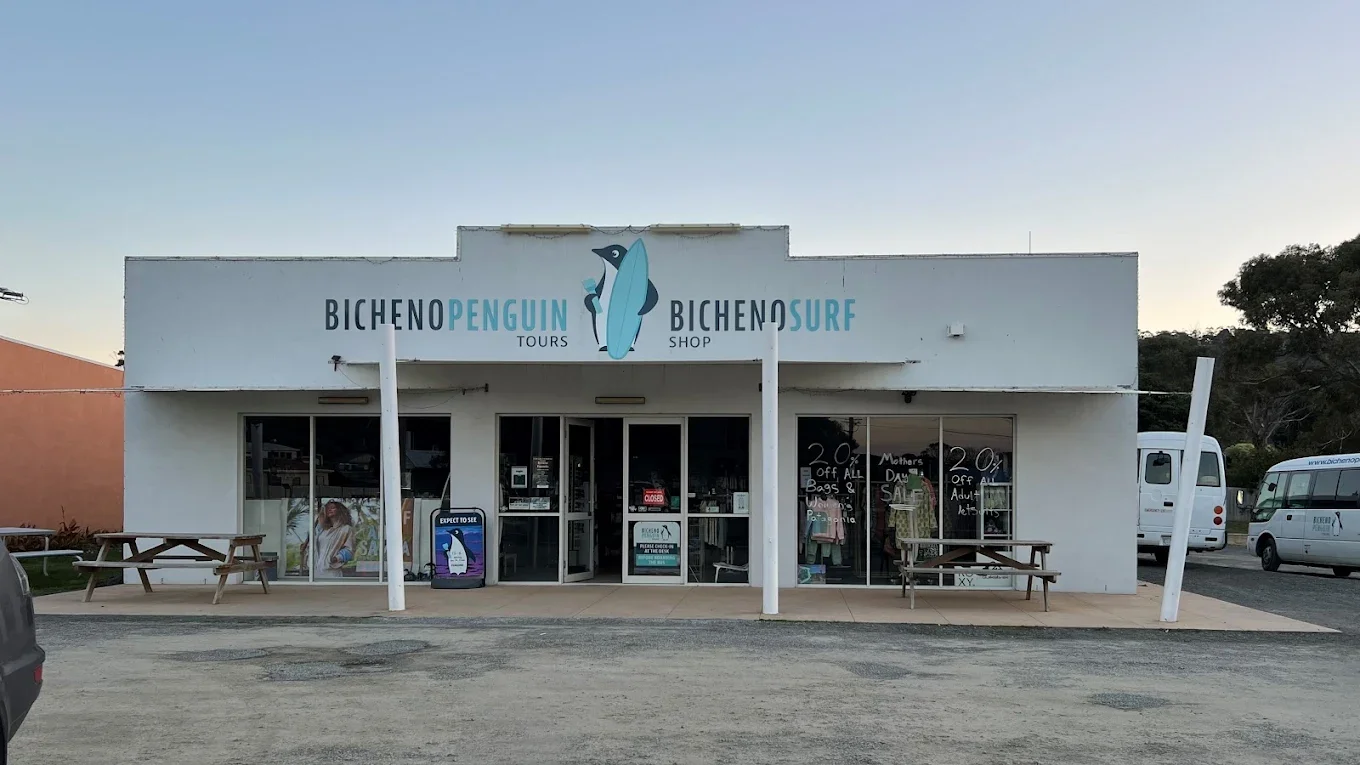
(C) Bicheno Penguin Tours
Option 2: Independent Viewing
If you choose to look for them independently along the public foreshore at dusk, please strictly adhere to the guidelines above. Look for designated information signs along the coast, choose a dark background to camouflage yourself, sit down, and wait quietly.
Thank you for protecting our local wildlife so future visitors—and future generations of penguins—can continue to enjoy Bicheno!
The Penguin Calendar
Between June and August, male penguins return to either renovate old burrows or to dig new ones. Noisy male courting displays greet arriving female penguins. It’s a party.
The usual number of two eggs may be found as early as May or as late as October. In successful years, two clutches might be reared in one season, it’s unusual, but possible. The penguin pairs share incubation shifts of usually 1–2 days and hatching takes place within 33 - 37 days. About 60% of the eggs successfully hatch.
When 5 weeks old, the chicks stay outside burrows waiting to be fed by both parents. That’s really noisy! Within another 2 or 3 weeks they are ready to move to the sea.
Penguin Moulting
For Little Penguins, the moulting season is often described as a period of "catastrophic moult"—and it definitely lives up to the dramatic name! Unlike most birds that lose and replace a few feathers at a time, penguins replace all 10,000 of their feathers all at once.
The timing and duration of this intense process for the Little Penguins in Bicheno and around Tasmania involve several key phases:
When is the Moulting Season?
The moulting season takes place at the end of the breeding cycle, typically running from February through April (late summer to early autumn).
The Pre-Moult Fattening (January/February): Because they cannot enter the cold ocean water without waterproof feathers, penguins must fast the entire time they moult. To survive, they spend a few weeks at sea gorging on fish, effectively doubling their body weight before coming ashore. They look incredibly round and heavy during this time!
The Peak Moult (February/March): This is when the majority of the colony hunkers down in their burrows or under cool, sheltered rocks to shed their old plumage.
How Long Does Moulting Take?
The actual time a penguin spends trapped on land shedding and regrowing its feathers is roughly 15 to 18 days (about 2 to 2.5 weeks).
During these 17-ish days, the penguins experience a massive transformation:
Day 1–3: Their bodies swell, and the old feathers begin to stand up, making them look very fluffy and unkempt.
Mid-Moult: The old, worn-out brown feathers fall out in huge clumps as the new, crisp blue-and-white feathers push their way through from underneath.
End of Moult: Once the new coat is fully grown and its vital waterproofing oils are restored, the penguins—now much slimmer, having lost up to half their body weight—will immediately head straight back out to sea to feed.
A Critical Time for Human Awareness
If you are visiting Bicheno during the February to April window, please be extra mindful:
They are grumpy and exhausted: Growing a whole new coat of feathers while starving makes the penguins feel incredibly itchy, hot, miserable, and low on energy.
They cannot escape into the ocean: If a predator or a human scares them, they cannot swim away to safety because they would get waterlogged and hypothermic.
Give them extra space: If you see a sad-looking, scruffy, or overly plump penguin sitting completely still in the dunes or near the rocks during the day, leave it be. They are just trying to survive their annual "bad hair month!"